
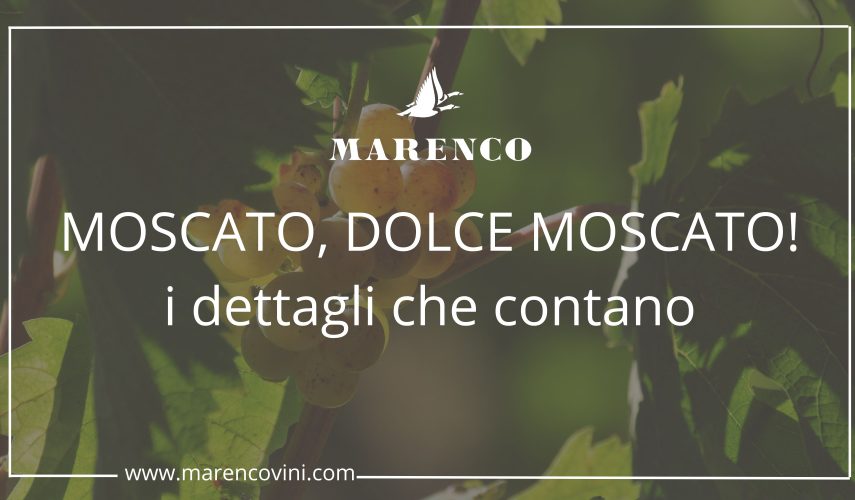
Sono i terpeni, sostanze odorose presenti libere nell’uva, a caratterizzare il profilo olfattivo del Moscato Bianco, e di cui possiamo godere sia assaggiando un fresco grappolo sia un bicchiere di Scrapona.
La fermentazione viene interrotta dopo un breve lasso di tempo, in modo da mantenere gli zuccheri naturali del mosto, che si bilanciano perfettamente con la freschezza intrinseca dell’uva.
In passato erano i “sacchi olandesi”, filtri in spesso cotone, ad arrestare il processo fermentativo.
Oggi ricorriamo all’abbattimento della temperatura e a filtri più performanti. Inoltre, durante la fermentazione viene trattenuta nel vino l’anidride carbonica che si sviluppa. Il risultato è un vino che nel bicchiere sintetizza dolcezza, intensità olfattiva, bassa gradazione alcolica e una cremosa spuma.
Ma a rendere ancora più unico il Moscato di Strevi sono i terreni di marna calcarea e il microclima marittimo dato dalla vicinanza al Mar Ligure, caratteristiche che donano alle uve freschezza e mineralità uniche, e che sfociano in una longevità incomparabile e un equilibrio straordinario:
un vino piacevolmente dissetante e versatile negli abbinamenti gastronomici.
Proprio per la longevità del Moscato di Strevi è nata la “Scrapona Collezione di Famiglia”:
alcune bottiglie della Scrapona vengono riposte ogni anno nel nostro caveau ad affinare per minimo quattro anni in bottiglia. Ne risulterà un Moscato dalla spuma perfettamente preservata, ma con profumi e aromi più complessi e avvolgenti.
Per la qualità ci vuole tempo, passione, costanza e pazienza, dalla vigna alla bottiglia. E Marenco lo sa, lo fa da 100 anni.
———————————————————————————————————————————————————————-
Producing quality Moscato is anything but trivial. Moscato is a pillar of the history and tradition of the Monferrato area, and Moscato di Strevi is even more so, blending the grape variety’s characteristics with those unique to the Bagnario Valley; here, Marenco produces Scrapona.
Terpenes, aromatic substances found free in the grape, characterize the aromatic profile of Moscato Bianco, which we can enjoy both by tasting a fresh bunch and a glass of Scrapona.
Fermentation is interrupted after a short period of time to preserve the must’s natural sugars, which balance perfectly with the grape’s intrinsic freshness.
In the past, so called “Dutch bags,” thick cotton filters, halted the fermentation process.
Today, we lower the temperature and use more efficient filters. Furthermore, the carbon dioxide released during fermentation is retained in the wine. The result is a wine that combines sweetness, aromatic intensity, low alcohol content, and a creamy foam in the glass.
But what makes Moscato di Strevi even more unique are the calcareous marl soils and the maritime microclimate created by its proximity to the Ligurian Sea. These characteristics give the grapes a unique freshness and minerality, resulting in incomparable longevity and extraordinary balance:
a pleasantly thirst-quenching wine that pairs well with food, both sweet and savoury.
The “Scrapona Family Collection” was created precisely because of the longevity of Moscato di Strevi:
Some bottles of Scrapona are placed in our vault every year to age for a minimum of four years in the bottle. The result is a Moscato with perfectly preserved foam, but with more complex and enveloping aromas and flavors.
Quality takes time, passion, consistency, and patience, from the vineyard to the bottle.
And Marenco knows this; they’ve been doing it for 100 years.
